About Caleb's Coasters
Reclaimed timber, handmade coasters, and a burning iron.
Hi, I'm Caleb
I make coasters. That's the short version.
The longer version: I started working with reclaimed wood because there was something that didn't sit right with me about perfectly good timber ending up as firewood or landfill when a tree comes down. New Zealand has some of the most beautiful native timbers in the world — Rimu, Kauri, Totara, Matai — and a lot of it gets discarded when old trees fall, buildings get demolished, or properties get cleared.
I started collecting that wood and turning it into something worth keeping. The coasters started as a practical thing. Now they're the main act. Every piece has a different grain, a different story, and a different character depending on where the wood came from and what kind of tree it was.
The shop is at 20 Colombo St. Come in, have a look, pick something up and feel the weight of it.
The Wood
Every coaster starts with a piece of timber that was already on its way out.
New Zealand's native forests are protected, and rightly so. But trees still come down — storms, age, land development, building demolitions. When that happens, the timber either gets recycled or wasted. That's where I come in.
I source reclaimed timber from properties around New Zealand — the kind cut down during land clearing, or salvaged from old buildings and structures. By the time it reaches me, the wood has already had a whole life. My job is to give it another one.
Different species have completely different characters:
What is Pyrography?
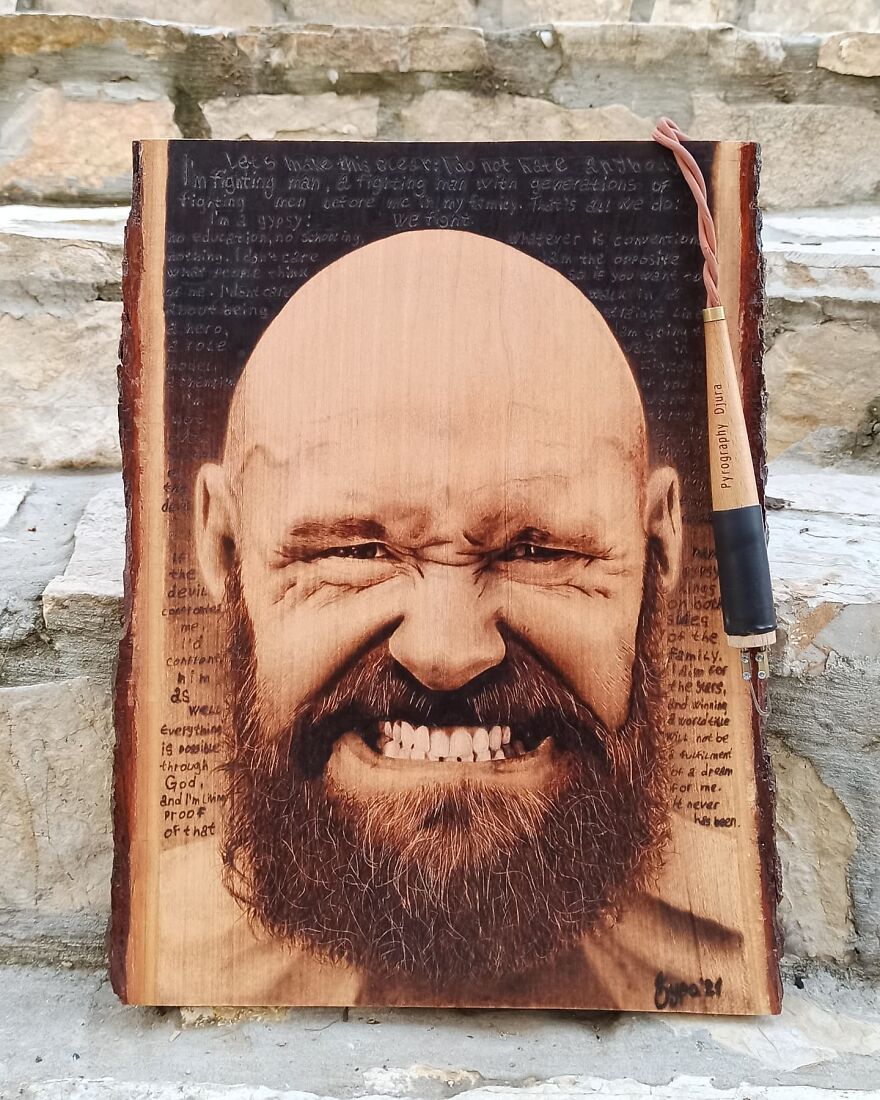
Literally "writing with fire." It's the art of burning designs directly into the surface of wood using a heated metal tip.
A pyrography pen works like a pencil — same grip, same movement — but instead of laying down graphite, the heated tip scorches the wood fibres. By controlling the temperature, speed, and pressure, you can create anything from fine hairline detail to deep, dark fills.
The colour comes entirely from the burn. A light touch at lower heat gives a soft tan. Slower movement at higher heat creates deep chocolate browns and near-blacks. There's no paint, no stain, no ink — just heat and wood reacting together.
What makes it interesting on reclaimed timber is that the grain becomes part of the artwork. Knots, grain lines, and natural variation in the wood affect how it takes the burn — which means every piece is genuinely one of a kind, even if I tried to reproduce it exactly.
A simple border design might be 20–30 minutes. A detailed scenic piece on a full-size coaster can be several hours. That's why the price range exists.
Name it
pyrography.jpg → public/images/